table of contents
Turn One Image Into Traffic: How Infographics Skyrocket Your SEO
Infographics combine visual storytelling with concise data to make complex ideas instantly understandable. Infographics convey information by transforming complex data into clear, visually appealing visuals that communicate messages effectively. They are a powerful tool in digital marketing, supporting broader digital marketing strategy objectives such as increasing visibility, engagement, and backlinks. Infographics simplify complex information, making detailed or complicated data more accessible and understandable. They can also influence search engine results by improving visibility, attracting clicks, and enhancing ranking factors. They increase user engagement, encourage sharing, and create linkable assets that search engines reward when they see sustained interest and authoritative references. For SEO, an infographic is more than a pretty image: it’s a multi-layered asset that can improve dwell time, attract backlinks, and provide multiple on-page optimization opportunities (file names, alt text, captions, and surrounding copy). Creating infographics requires thorough research to ensure the information presented is accurate and valuable. Infographics are 30 times more likely to be read than text articles. When paired with a well-optimized landing article, an infographic helps search engines index both visual and textual signals, improving the chances of ranking for a broader set of queries. To create an impactful infographic, define its objective and identify the target audience. Infographics benefit SEO by driving organic traffic and supporting a comprehensive digital marketing strategy.
Key Takeaways
- Visuals capture attention faster than text, and infographics present a clear hierarchy (headline, data points, and visuals) that reduces cognitive load. An effective infographic communicates a clear message, is visually appealing, and keeps users on the page longer, improving dwell time and lowering bounce rates.
- Infographics package research into a reusable asset that other sites embed and credit, generating more backlinks (often cited as 178% more) than text-only posts. Support your infographics with valuable data and concise, easy-to-understand text, include expert citations, and use visually appealing elements like icons and diagrams. Provide easy embed code and a canonical landing page to capture those links and boost domain authority.
- Infographics are highly shareable on platforms like Pinterest, LinkedIn, and Facebook, driving referral traffic and increasing visibility that can lead to editorial links. They also offer multiple SEO touchpoints (image file names, alt text, surrounding copy, and the embedded article), so optimize each layer with descriptive filenames, keyword-aware alt text, and structured headings.

1. High Engagement: Infographics for SEO
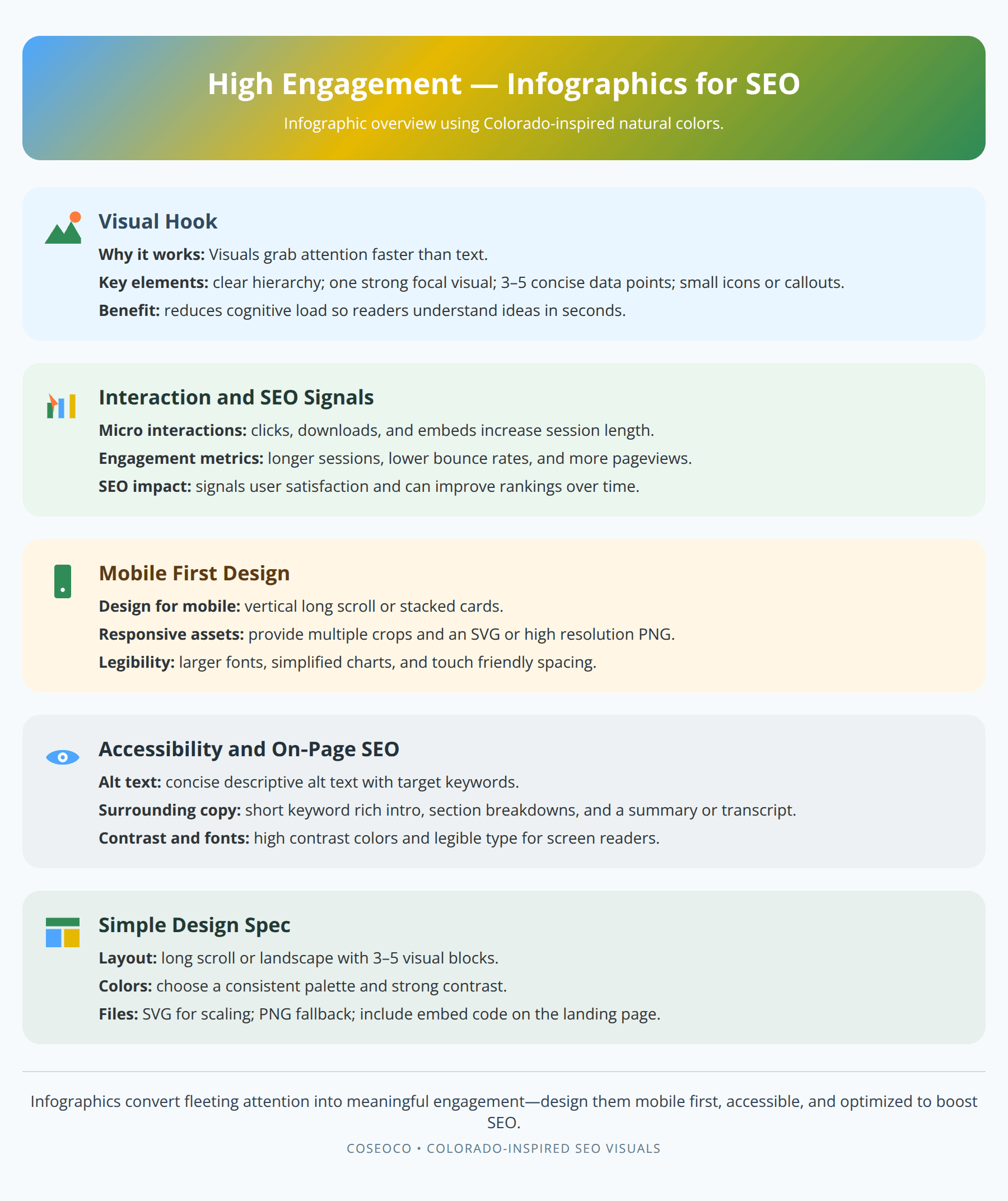
Visual content captures attention faster than text, and infographics are engineered to do exactly that. A well-designed infographic presents a clear visual hierarchy, a compelling headline, concise data points, and supporting visuals that guide the eye. This reduces cognitive load for readers, helping them understand complex ideas in seconds rather than minutes. When visitors can quickly grasp value, they’re more likely to stay, scroll, and interact with the page, a behavior that increases dwell time, a user engagement metric search engines consider when evaluating content quality.
Beyond initial attention, infographics encourage deeper interaction. Readers often pause to examine charts, icons, and callouts; they may click through to related sections, download the image, or use it as a reference. These micro interactions add up: longer session durations, lower bounce rates, and more pageviews per visit. For SEO, those signals suggest the page satisfies user intent, which can improve rankings over time. Infographics also make content scannable for mobile users, who represent a growing share of search traffic. Creating infographics that are mobile-friendly is crucial, as an increasing number of users browse the web on mobile devices. Using a long scroll format and responsive layouts ensures compatibility with mobile devices and enhances the user experience on smartphones and tablets. Search behavior is increasingly leaning towards mobile and conversational queries, making mobile-first design essential for an effective infographics SEO strategy. A single, responsive infographic can deliver the same message across devices without forcing users to read long paragraphs.
Finally, infographics support content variety and accessibility. Pairing an infographic with a short, keyword-rich article gives search engines both visual and textual signals to index. Providing descriptive alt text and a transcript or summary beneath the image ensures screen readers and crawlers can interpret the content. Accessibility considerations are vital, including using high contrast colors and legible fonts to ensure readability of infographics. Use a consistent color scheme, legible fonts, and contrast to emphasize important content and enhance visual appeal. In short, infographics convert fleeting attention into meaningful engagement, an essential step toward better search performance.
2. Backlink Magnet
Infographics are inherently linkable assets: they package research, insights, or step-by-step processes into a single visual resource that other creators want to reuse. When bloggers, journalists, or industry sites embed an infographic, they typically credit the source with a backlink. That pattern of reuse explains why content with infographics can generate substantially more backlinks than text-only posts. Backlinks remain a core component of search algorithms because they act as third-party endorsements of authority and relevance.
The mechanics are straightforward. An infographic that presents original data, a unique framework, or a clear how-to is easy to cite. Outreach campaigns that offer embeddable code snippets (HTML with a link back) lower the friction for other sites to share the graphic. Promoting infographics on relevant websites is crucial for reaching the right audience and earning quality backlinks. When those shares accumulate across reputable domains, your site’s domain authority improves, which helps other pages on your site rank better. Even a handful of high-quality backlinks from niche publications or industry blogs can have an outsized impact compared with many low-value links.
Backlinks from infographics also diversify your link profile. Infographics encourage other websites to embed and share them, which generates organic backlinks and increases website traffic. Instead of relying solely on guest posts or directory listings, you gain natural editorial links that look organic to search engines. As part of your link-building strategy, submit your infographics to infographic directories to further increase exposure and earn additional backlinks. To maximize this effect, pair the infographic with a well-optimized landing page that includes the full-size image, embed code, and a short explanatory article. That page becomes the canonical source for the graphic and the primary target for incoming links. In practice, a single, well-promoted infographic can catalyze a steady stream of backlinks that compound over months and years.
3. Social Shareability
Infographics are built for sharing. Their compact, visual format fits social feeds and visual platforms where users expect quick, useful content. Pinterest, LinkedIn, Facebook, and even Instagram favor images that tell a story at a glance; infographics meet that need by combining headline, data, and visual cues in one package. Social media platforms play a crucial role in promoting infographics, increasing site visits, and expanding your content’s reach. When users save, repost, or pin an infographic, they create referral pathways that drive traffic back to the original article, traffic that search engines can interpret as a signal of popularity and relevance.
Social shares also amplify reach beyond your immediate audience and drive more site visits. A single share by an influencer or niche community can expose your infographic to thousands of new viewers, some of whom will link to or embed the graphic on their own sites. Social platforms often serve as discovery channels for journalists and bloggers searching for visual assets or data to support their stories. That secondary exposure frequently converts into editorial backlinks and additional social mentions, creating a virtuous cycle of visibility.
To optimize for social shareability, design infographics in an engaging way with platform-friendly dimensions and include multiple crop options (tall pins for Pinterest, square or horizontal versions for feeds). Add clear branding and a short URL or watermark so shares still point back to your site. Encourage sharing by providing embed code and social buttons on the infographic’s landing page. When social traction and referral traffic increase, search engines take notice, especially if the engagement is sustained and comes from diverse sources.
4. Keyword Optimization
Infographics offer multiple touchpoints for keyword optimization beyond the image itself. Begin with thorough keyword research to identify the right keywords and relevant keywords that align with user intent and search queries. Use descriptive, keyword-rich file names for your infographics, avoiding generic labels, to improve search engine visibility. Optimize for image search by using descriptive file names, relevant alt text, and proper image formats. Add alternative text, alt text within HTML that clearly describes the infographic, includes relevant keywords, and enhances both accessibility and search engine understanding. Next, craft alt text that succinctly describes the infographic while incorporating target phrases; alt text helps search engines and screen readers understand the image content. Surround the infographic with supporting copy that expands on the visual points: a concise introduction, a detailed breakdown of each section, and a conclusion that reiterates the main takeaways using natural keyword variations.
The landing page is crucial. Embed the infographic within a keyword-optimized article that provides context, sources, and additional insights. Use headings H2, H3 that mirror the infographic’s structure and include long tail keywords and semantic variations. Craft a concise meta description that summarizes the page, includes target keywords, and encourages clicks. Use structured header tags and well-crafted URLs to ensure the entire web page is optimized for SEO. This combination of visual and textual signals helps search engines index the content for a broader set of queries. Additionally, structured data schema markup can be applied to the page to indicate the content type and improve the chance of rich results.
Don’t forget technical SEO: fast loading times are a critical ranking factor in 2025, so compress images using tools like TinyPNG to reduce file sizes without sacrificing quality. Serve responsive images with srcset, and provide an SVG version if possible for crisp scaling. Use SEO tools to track backlinks, analyze SEO results, and monitor search queries and engagement metrics to measure the impact of your infographic. Use descriptive captions and include a downloadable version with metadata intact. Infographics are also a powerful way to summarize data, processes, or lists, which can help capture featured snippets and improve visibility in search queries. By optimizing file names, alt text, surrounding copy, and the embedded article, you turn a single infographic into a multi-layered asset that ranks for both visual and textual queries.
5. Evergreen Value
One of the strongest SEO advantages of infographics is their longevity. Unlike news-driven posts that peak and fade, well-researched high quality infographics, especially those containing valuable data and original research, often remain relevant for years. Infographics are particularly effective for explaining complex topics and presenting complex data or complex information in a clear visual representation, making them accessible and engaging for a wide audience. A clear, evergreen infographic explaining a process, summarizing foundational data, or illustrating a timeless concept continues to attract traffic, shares, and backlinks long after publication. That sustained performance compounds SEO benefits over time, as ongoing engagement signals to search engines that the content remains useful.
Evergreen infographics also simplify content maintenance. Instead of frequent rewrites, you can periodically update a single graphic or its landing page with new data points or refreshed design elements. Maintaining brand identity in your infographic design is crucial, ensuring consistency with your overall branding strategy. Using the right design tools helps create visually appealing graphics that stand out and encourage sharing. For most infographics, using large images (at least 1200 pixels wide) improves user experience and SEO, as high-resolution visuals load well and display properly across devices. Each update is an opportunity to re-promote the asset, reclaim lost rankings, and earn fresh backlinks. Because the core concept remains stable, the infographic can serve as a cornerstone piece that supports related blog posts, guides, and social campaigns.
To maximize evergreen potential, focus on universal topics and authoritative sources. Cite reputable data, use clear visual metaphors, and design for clarity rather than trendiness. Host the infographic on a permanent URL and include a version history or update log to show freshness. Optimize the entire web page where the infographic is published to enhance search visibility, user engagement, and long-term SEO. Promote the asset through evergreen channels, resource pages, educational content, and industry roundups, so it becomes a go-to reference. Over time, a single evergreen infographic can become a durable traffic driver and a reliable contributor to your site’s long-term SEO health, thanks to all that visual content can offer.

Conclusion
Infographics are a cost-effective, long-lasting SEO tool when created and promoted strategically. They boost engagement, earn backlinks, and provide multiple optimization opportunities, making them a high-impact asset for content strategies focused on visibility and authority.
Inforgraphics SEO Key Terms – Important Concepts to Know
Dwell time
The length of time a user spends on a page after clicking from search results; higher dwell time can indicate content relevance.
Backlink
A link from another website to yours; quality backlinks signal authority to search engines.
Alt text
Descriptive text for images that helps search engines and screen readers understand visual content.
Domain authority
A predictive metric (third-party) that estimates a site’s ability to rank based on its backlink profile and other signals.