table of contents
SEO in 2026: The Year Everything Will Change and How You Can Adapt
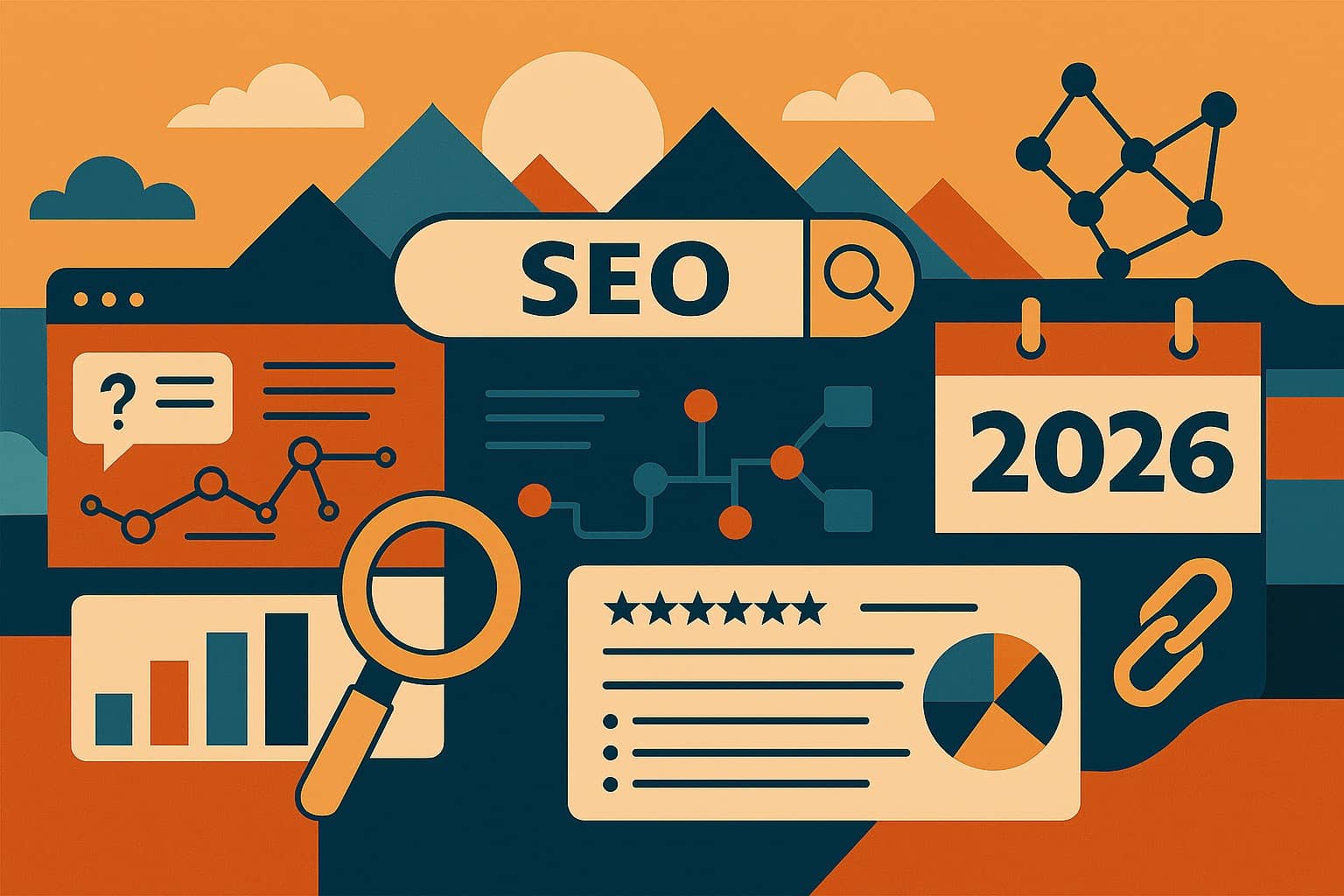
SEO in 2026 is going to be shaped by AI-driven search, zero-click results, and hyper-competitive markets. SEO trends will now be defined by rapid advances in AI, evolving digital strategies, and the current AI hype, which together are transforming how brands approach online visibility. In 2026, SEO will require a focus on being mentioned in the right places to achieve visibility, with agentic readiness, such as clean structured data and knowledge graphs, becoming essential for success. SEO professionals must evolve their roles to focus on business-relevant KPIs, user behavior, and conversion impact, rather than just keyword rankings. There is a clear shift from traditional keyword focus to optimizing for AI and LLM discovery, with a strong emphasis on clarity and context in content to meet the needs of both users and AI systems. Digital strategies must adapt to these changes, and understanding and leveraging the current AI hype can help prioritize foundational SEO improvements and avoid distractions from fleeting trends.
Promise: This article goes beyond surface-level advice, showing step-by-step workflows, snippet strategies, and industry-specific tactics.
Key Takeaways
- Build resilience with evergreen content + strong technical SEO.
- Prove ROI by tying SEO wins directly to business outcomes.
- Win snippets using definition + unique value structures.
- Unlock long-tails with KD filters + real intent validation.
- Expand coverage through topic clusters and interconnected content.
- Tailor strategies for niche industries

1. Navigating Search Engine Algorithm Volatility
Challenge: Frequent Google core updates can disrupt rankings, making it difficult to maintain consistent visibility.
Actionable Strategy:
- Leverage Google Search Console: Track CTR and position shifts to identify how updates affect your pages. Monitor SERP changes to understand evolving ranking factors.
- Create update-proof content: Focus on evergreen definitions supported by fresh case studies to balance stability with relevance.
- Strengthen technical SEO: Ensure fast site speed, mobile responsiveness, and structured data implementation. A solid technical foundation improves resilience against algorithm changes and enhances SERP performance.
- Maintain performance: Consistently optimize speed and mobile usability—critical for both user experience and SEO success.
Example Workflow: Use Semrush’s Sensor tool to monitor competitor volatility and spot opportunities when rankings shift.
2. Proving SEO ROI to Stakeholders
Challenge: Stakeholders often view SEO as a long-term gamble, leading to skepticism about its value.
Actionable Strategy:
- Forecast ROI with clear models: Use the formula traffic × conversion rate × average order value (AOV) to project revenue impact.
- Tie SEO metrics to business outcomes: Move beyond rankings and impressions—show how SEO drives conversions, sales, and customer acquisition.
- Deliver quick wins: Target low-difficulty (KD <30), mid-volume keywords that can rank within 90 days to demonstrate early traction.
- Build confidence with proof points: Present case studies or dashboards that connect keyword gains directly to revenue growth.
Example Workflow: A supplement brand secures early ROI by ranking for “best magnesium glycinate dosage,” a low-KD, intent-rich keyword, before expanding into the highly competitive “magnesium supplements” space.
3. AI Search & Zero-Click Search: Winning Featured Snippets
Challenge: AI-driven summaries and zero-click results increasingly reduce organic traffic, as users get answers directly in search results or AI Overviews.
Actionable Strategy:
- Optimize for snippets, not against them: Treat featured snippets as prime real estate. Aim to own the definition box while still enticing users to click through.
- Use the “definition + unique value” structure:
- Start with a clear, concise definition (e.g., “Headless commerce is an architecture where the front-end and back-end are decoupled.”).
- Immediately pivot to unique insights or pitfalls (e.g., “But most platforms fail at implementation because they overlook API scalability.”).
- Implement schema markup: Add FAQ, HowTo, and definition schema to make content machine-readable and snippet-ready.
- Structure for AI citation: Format content so AI systems can easily reference it. Use headings, bullet points, and concise definitions. In 2026, the SEO goal is to be the trusted source AI pulls from, meaning your content must be authoritative, structured, and citable.
- Balance snippet capture with click-through: Pair definitions with deeper insights, case studies, or frameworks that AI cannot fully summarize, giving users a reason to visit your site.
Example Workflow: A SaaS brand targets “API-first commerce” by:
- Creating a definition box that explains the concept in one sentence.
- Following immediately with a case study showing how poor API governance derailed a competitor’s rollout.
- Adding FAQ schema to capture related queries like “API-first vs headless commerce,” with AI answers and AI Overviews. The goal of SEO in 2026 is to be the source that AI trusts and uses, which requires content to be well-structured and easy for AI systems to cite.
Example: SaaS brand captures snippet for “API-first commerce” with a definition box + case study.
4. Saturated Market: Finding Untapped Long-Tails
Challenge: In hyper-competitive industries, generic keywords are overcrowded, making it difficult to stand out and capture meaningful traffic.
Actionable Strategy:
- Start with intent analysis: Research your target keyword to understand why users search for it. Examine SERPs to identify gaps in existing content and opportunities to answer questions competitors overlook.
- Deploy a structured workflow with Semrush:
- Filter for keyword difficulty (KD) <30 and search volume >100.
- Layer in question modifiers (e.g., “how,” “why,” “difference between”) to surface intent-rich queries.
- Validate demand by cross-referencing with Reddit, Quora, and niche forums to ensure real users are asking these questions.
- Prioritize content depth: Studies show the average first-page Google result is ~1,447 words. Aim for comprehensive coverage that balances depth with clarity.
- Differentiate with proprietary insights: Incorporate original research, internal data, or case studies. This elevates authority, attracts backlinks, and helps outrank larger publications that rely on generic content.
- Structure for discoverability: Use clear headings, FAQs, and schema markup to capture long-tail visibility across both traditional SERPs and AI-driven search results.
Example Workflow: An aviation supplier identifies the query “difference between AS9100 vs NADCAP audits” using the KD <30 filter. By validating demand in industry forums and then publishing a 1,500-word guide with proprietary audit data, the supplier not only ranks for the long-tail keyword but also earns backlinks from compliance blogs and industry associations.
5. Topics vs Keywords: Expanding Intent Coverage in SEO Strategy
Challenge: Google’s query fan-out means a single search can trigger dozens of related questions and variations. Ranking well now requires comprehensive topic coverage, not just isolated keyword targeting.
Actionable Strategy:
- Plan content clusters: Map out semantic relationships between core topics and subtopics. Each article should connect through internal linking to strengthen site architecture and improve crawlability.
- Structure for both users and AI: Use clear headings, a Table of Contents, and embedded FAQs to enhance navigation. Well-structured content helps AI systems interpret and surface your pages in AI Overviews.
- Leverage “People Also Ask” data: Use Google Search Console and SERP features to identify related queries. Expand FAQs to cover these questions, ensuring your content addresses the full spectrum of user intent.
- Build interconnected clusters: Anchor each cluster around a core topic, then branch into supporting articles that cover definitions, use cases, comparisons, and myths.
- Enhance authority with depth: Include original insights, proprietary data, or case studies to differentiate your content from generic competitors.
Example Workflow: A supplement brand builds a Vitamin C content cluster:
- Core article: “Vitamin C Serum Basics” (definition + benefits).
- Supporting articles: “Vitamin C for Acne,” “Vitamin C Dosage Myths,” “Best Time to Apply Vitamin C Serum.”
- Interlinking: Each article links back to the core piece and cross-links to related subtopics. Result: The brand dominates intent coverage across multiple queries, improving topical authority and visibility in both SERPs and AI-driven search results.
6. Industry-Specific SEO Playbooks
SEO success in 2026 depends on tailoring strategies to the realities of each vertical. Here’s how different industries can approach search with precision:
Aviation
- Target certification keywords: AS9100, NADCAP, FAA compliance terms.
- Publish insider guides: Compliance checklists and audit preparation resources build authority.
- Engage in niche forums: Aviation suppliers and contractors gain credibility by contributing to specialized communities.
Construction & Contractor
- Local SEO first: Optimize Google Business Profiles, reviews, and service-area pages.
- Project showcase content: Case studies with before/after visuals drive trust and conversions.
- Schema markup: Use service and review schema to stand out in local SERPs.
E-commerce
- Multimodal content: Pair blogs with product videos, newsletters, and shoppable guides.
- Optimize category pages: Ensure keyword-rich, structured content for product discovery.
- Digital PR: Secure features in lifestyle and retail publications to boost brand visibility.
Financial Advisors
- Trust signals: Highlight credentials, fiduciary responsibility, and compliance with regulations.
- Educational clusters: Build content around retirement planning, tax strategies, and investment FAQs.
- E-E-A-T focus: Showcase expertise through thought leadership articles and client testimonials.
Insurance Agencies
- Answer intent-rich queries: “Best health insurance for families” or “contractor liability coverage explained.”
- Comparison content: Side-by-side breakdowns of policy types attract backlinks and clicks.
- Local authority: Optimize for regional searches and highlight community involvement.
Legal Services
- Definition snippets: Own terms like “probate law” or “personal injury statute of limitations.”
- Case study content: Share anonymized examples to demonstrate expertise.
- Structured FAQs: Capture “People Also Ask” queries with schema-enhanced answers.
Medical Practices
- E-E-A-T priority: Publish content authored by licensed professionals with clear disclaimers.
- Local SEO: Optimize for “near me” searches and patient reviews.
- Educational guides: Cover treatment options, recovery timelines, and preventive care.
Real Estate Agencies
- Hyperlocal content: Neighborhood guides, school district breakdowns, and market trend reports.
- Video tours: Pair listings with YouTube walkthroughs for multimodal visibility.
- Authority building: Secure backlinks from local news outlets and housing blogs.
Wedding & Event Services
- Visual-first SEO: Optimize galleries, Pinterest boards, and video content.
- Seasonal content: Target queries like “best fall wedding venues” or “2026 event trends.”
- Vendor collaboration: Cross-link with florists, photographers, and venues to expand reach.
The Bigger Picture: Multichannel Visibility
In 2026, SEO is evolving into Total Search Optimisation:
- International SEO: Localize content for global audiences and respect cultural nuances.
- Original research: Publish proprietary insights to stand out in crowded markets.
- Beyond Google: Optimize for AI Overviews, social platforms, forums, and LLM-driven search.
- Consistent narrative: Ensure your brand story is aligned across every channel where curiosity strikes.

Conclusion: SEO in 2026 Demands Precision, Authority, and Multichannel Presence
The landscape of SEO in 2026 is no longer about chasing rankings with generic tactics; it’s about precision workflows, trust-building, and industry-specific playbooks. Algorithm volatility requires resilient strategies rooted in evergreen content and technical excellence. Stakeholders demand ROI proof, which means connecting SEO metrics directly to business outcomes. AI-driven search and zero-click results are reshaping discovery, making snippet optimization and structured content essential for visibility.
Winning in saturated markets now depends on uncovering untapped long-tail opportunities, validating real user intent, and differentiating with proprietary insights. Topic clusters have become the backbone of SEO, ensuring comprehensive coverage that satisfies both human curiosity and AI interpretation. And most importantly, success looks different across industries: supplements thrive on E-E-A-T, SaaS on definition snippets, aviation on certification keywords, and retail on multimodal content.
The bigger picture is clear: SEO has evolved into Total Search Optimisation. Brands must think beyond Google, optimizing for AI Overviews, social platforms, forums, and global audiences. Authority is no longer just what you say about yourself, but what others say about you. In this new era, the brands that combine trust, originality, and multichannel visibility will not only survive but lead.
The takeaway? SEO in 2026 is about owning the narrative wherever curiosity strikes