table of contents
Google Algorithm Chaos 2025: 12 Months of SEO Disasters Documented
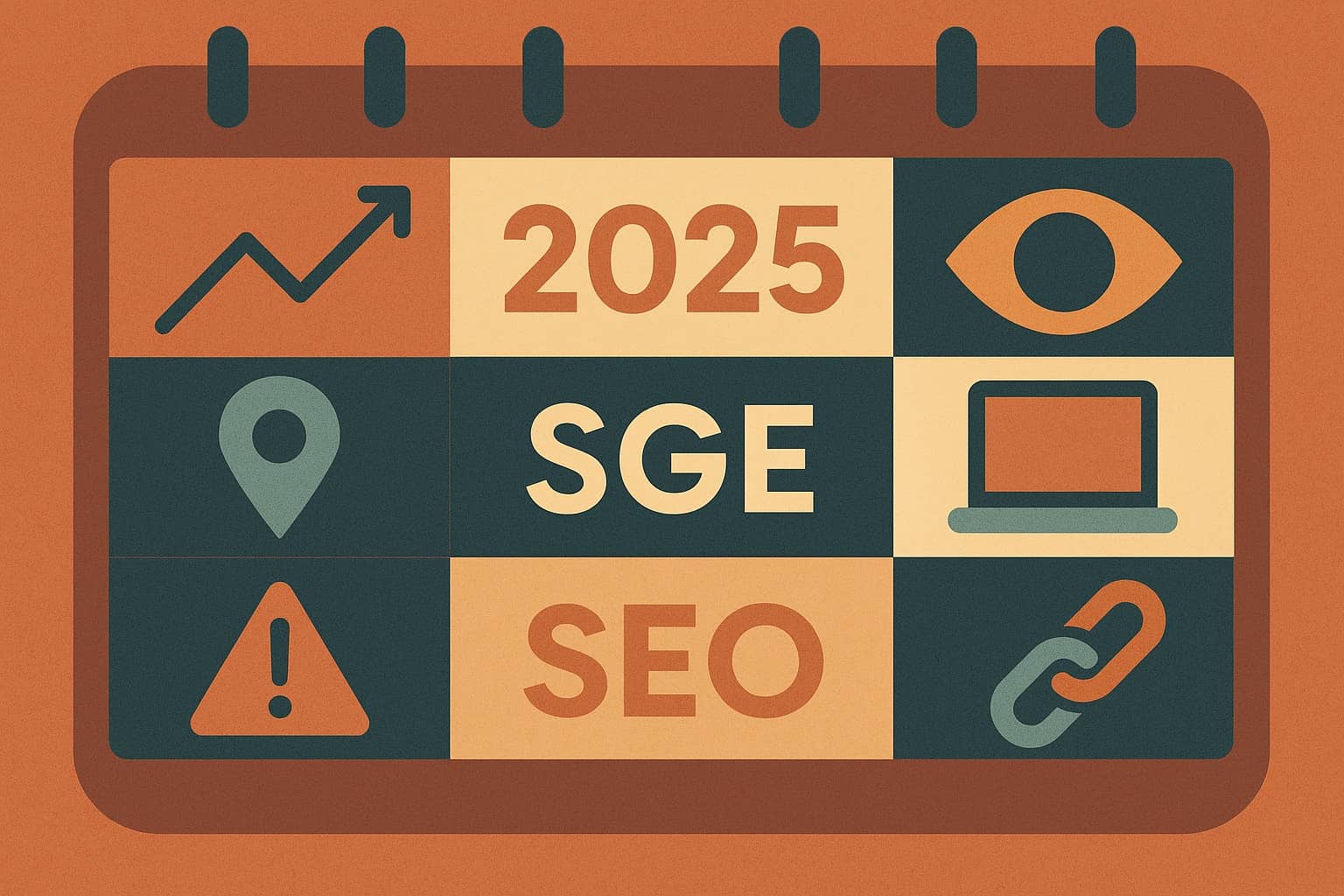
2025 will be remembered as the year Google’s algorithm became too complex for its own creators to control. What started as routine updates in January cascaded into twelve months of unprecedented chaos, and established businesses lost decade-old rankings overnight, causing dramatic shifts in search engine results and reshaping the search engine results page (SERP) with new features and unpredictable visibility. Spam overtook expertise, and the basic principles of SEO inverted without warning, leading to a collapse in search results and search rankings as one thriving business lost 70% of its organic traffic in February. This isn’t just another year-in-review article filled with recycled announcements and speculation. This is a battlefield report from someone who fought through every recovery attempt Google recommended, and learned that the only winning move was to stop playing by Google’s broken rules. These changes upended traditional search engine optimization, forcing everyone to rethink their strategies. If you survived 2025, you earned your stripes. If you didn’t, this chronology will show you exactly why, and more importantly, what actually worked when the playbook burned.
Key Takeaways
-
Traditional Authority Signals Died in 2025 – Ten years of content, thousands of backlinks, perfect optimization—all worthless after February’s update. Fresh spam sites now outrank established authorities. Build for platforms that value expertise, because important SEO trends now focus on adaptability, and Google demonstrably doesn’t.
-
Volatility Became the Only Constant – Rankings cycle from position 1 to 100 multiple times daily. Forget stable rankings, optimize for traffic spikes during brief visibility windows, as this volatility directly impacts SEO performance and website traffic. Embrace the chaos or watch competitors who will eat your lunch.
-
Google Independence Is Now Mandatory – Smart SEOs used 2025’s carnage to break their Google addiction. Survivors built direct audiences through email, social, and owned communities. Google broke trust permanently, and betting your business on their algorithm is now provably suicidal.
January: “New Year, Same Promises”
Google kicked off 2025 with fanfare around their updated quality rater guidelines (highlighting E-E-A-T as a core framework for evaluating content credibility and trustworthiness), specifically promising better recognition of genuine expertise through enhanced EEAT signals. The documentation emphasized “creator-first” content, stressing the importance of content optimization and how E-E-A-T serves as a ranking factor influencing visibility and authority in search results. By January 15th, early data showed the opposite: parasite SEO on major news sites dominated while legitimate subject matter experts watched their rankings plummet, impacting Google search results and coinciding with the rise of AI overviews in SERPs. The disconnect between Google’s public messaging and actual SERP behavior set the tone for a year of broken trust, underscoring the gap between Google Search and its public guidance.
February: “The Valentine’s Day Massacre”
February 14th’s core update was supposed to reward “helpful, reliable, people-first content” that matches user intent and search intent, but instead delivered the most brutal delisting event in SEO history. Sites with 10-15 years of consistent authority, including medical practices, local service businesses, and niche expertise blogs, lost 60-90% of their traffic overnight, with dramatic impacts on target keywords and user queries. The update seemed to favor fresh domains with thin content over established authorities, completely inverting traditional SEO logic and highlighting the need for updated keyword research to understand what now matches search intent. Recovery attempts using Google’s own documentation failed spectacularly, forcing the first wave of mass pivots to paid advertising.
March: “March Madness Begins”
Google partially rolled back February’s Helpful Content Update signals, creating unprecedented ranking volatility. The flood of automatically generated content, including AI-generated summaries and AI overviews now appearing at the top of Google’s results, overwhelmed the SERPs. Sites would rank #1 in the morning and disappear by afternoon, with sites publishing 100+ AI articles daily using AI tools and responding to the rapid evolution of AI search. The volatility particularly hammered e-commerce sites during pre-Easter shopping, with product pages cycling through positions 1-100 multiple times daily as SERP quality degraded so severely due to shifts in search behavior and the rise of zero-click searches. This marked the beginning of “volatility SEO,” optimizing not for stable rankings but for capturing traffic during brief ranking spikes, as many users now skip past the first page entirely because the search results page is dominated by AI-generated summaries and other instant answers.
April: “AI Generated Content Floods the Gates”
After Google reduced local packs from 3 to 2 results, the impact on local business visibility became significant, especially as search platforms increasingly focus on content that serves user intent. When the proximity algorithm went haywire, it became even more important for local business owners to optimize for specific keywords and related queries to maintain visibility in local search results.
After years of warning against “automatically generated content,” Google’s John Mueller admitted they could no longer reliably detect AI-written content, effectively surrendering the battle. The policy reversal opened floodgates as sites publishing 100+ AI articles daily suddenly outranked carefully crafted human content. The SERP quality degraded so severely that user behavior shifted, bounce rates skyrocketed as searchers learned to skip past the first page entirely. Smart SEOs began focusing on brand search and direct traffic, recognizing organic SERPs had become an AI wasteland.
May: “Local SEO Pack Apocalypse”
Google’s quiet reduction of local packs from 3 to 2 results in major metropolitan areas cutting local search visibility by 33% overnight. Worse, the proximity algorithm went haywire, search engine algorithms and machine learning played a role as businesses 0.1 miles closer to arbitrary center points dominated regardless of reviews, relevance, or history. Established local businesses with perfect optimization lost visibility to empty lots that happened to be geographically closer to Google’s selected coordinates, highlighting the importance of structured data and content optimization in avoiding being deindexed for “spam”. The local SEO community documented over 400 cases of parking lots outranking actual businesses, as content creation practices were penalized by flawed search algorithms.
June: “The Spam Update That Wasn’t”
June’s spam update promised to clean up manipulative tactics, but instead triggered false positives across legitimate industries. Law firms, medical practices, and financial advisors found themselves deindexed for “spam” while actual spam networks selling fake reviews and links thrived untouched. Google’s manual review process collapsed under volume, with appeals taking 6-8 weeks for response. The update revealed Google’s spam detection relied heavily on crude keyword density metrics that penalized any site using industry-standard terminology.
July: “Mobile-First Becomes Mobile-Only”
Desktop and mobile rankings completely decoupled, creating two distinct Googles with different algorithms. Sites optimized for desktop users (B2B, professional services, long-form content) discovered their mobile rankings operated on entirely different signals, primarily Core Web Vitals and interaction metrics. The split forced companies to choose between desktop conversion rates and mobile visibility, with many creating separate mobile domains reminiscent of 2010’s m-dot sites. Technical SEO became exponentially complex as strategies that helped mobile rankings actively hurt desktop performance, especially as user-generated content dominating commercial queries began to significantly impact organic search traffic across various search platforms.
August: “The Great Reddit Takeover”
Google’s partnership with Reddit resulted in user-generated content dominating commercial queries regardless of accuracy or expertise. After Core Web Vitals ceased influencing rankings, the shift in ranking factors placed ongoing importance on high-quality content, yet searches for medical conditions, financial advice, and product reviews returned Reddit threads as 7 of the top 10 results, pushing authoritative sites below the fold. The shift revealed Google’s pivot from information quality to engagement metrics; a two-year-old Reddit comment with three upvotes outranked Mayo Clinic’s medical content. SEOs began seeding Reddit with strategic content, creating the exact manipulation Google claimed to prevent.
September: “Core Web Vitals Dies Quietly”
Without announcement, Core Web Vitals ceased influencing rankings despite two years of Google insisting they were crucial ranking factors. Sites that invested thousands in speed optimization watched slower competitors pass them while Google silently removed CWV from their documentation. The reversal exposed how Google’s public guidance often reflected aspirational engineering goals rather than actual ranking factors, highlighting the unstable SEO landscape and the unpredictability of search engine algorithms that shape search rankings. Performance-obsessed sites learned they’d optimized for metrics Google had already abandoned.
October: “Hidden Algorithm Update Chaos”
October brought daily ranking fluctuations without any confirmed updates, suggesting either continuous algorithm testing or complete system instability. With the introduction of the Search Generative Experience (Google’s AI overview), which leverages AI overviews and AI-generated summaries to synthesize information from multiple sources, the landscape shifted dramatically. Multiple tracking tools recorded 70%+ ranking volatility lasting weeks, making it impossible to correlate changes with specific optimizations. The dominated visual hierarchy on the search results page, driven by the rise of serp features, further complicated visibility for traditional organic listings. Google’s refusal to acknowledge the updates while SEOs documented massive SERP upheaval created an atmosphere of complete distrust. Traditional featured snippets disappeared, leading to an increase in zero-click searches as more answers were provided directly on the SERP. Sites succeeded or failed randomly, turning SEO strategy into pure gambling.
November: “SGE Breaks Organic CTR”
Search Generative Experience (Google’s AI overview) expanded to cover the entire above-fold space, reducing organic CTR by 40-60% even for #1 rankings. This shift highlighted the importance of SEO as a marketing channel within the broader digital marketing strategy, especially when comparing paid and organic efforts. The AI summaries frequently contained inaccurate information scraped from unreliable sources, but dominated the visual hierarchy. Traditional featured snippets disappeared, replaced by AI-generated content that couldn’t be optimized for or corrected. As a result, investment in brand authority—supported by strategic content creation and the need to create content that can rank content across multiple platforms- became essential. Organic search transformed from a traffic driver to a brand awareness tool as actual clicks became increasingly rare.
December: “Preparing for 2026’s Unknown”
The only consistent pattern from 2025 was inconsistency itself. Successful recovery stories shared common threads: diversification beyond Google, investment in brand authority, and treating SEO as one channel among many rather than the primary strategy. Sites that survived built direct relationships with audiences through email, social, and community platforms. The year proved that Google’s algorithm had become too complex for even Google to control, making adaptability, staying up to date with SEO trends, and understanding the evolving SEO landscape essential for maintaining rankings. Channel diversity is now the only reliable SEO strategy moving forward.

Conclusion
If 2025 taught us anything, it’s that Google’s relationship with publishers fundamentally broke. The algorithm became a black box even to its creators, public guidance proved actively harmful, and the only consistent pattern was randomness itself. But within this chaos lies opportunity. While others waste resources chasing algorithmic ghosts, smart marketers are building antifragile strategies, direct relationships, multiple traffic channels, and brand equity that transcends any single platform’s whims. The SEOs who thrive in 2026 won’t be the ones who finally “crack” Google’s code; they’ll be the ones who stopped trying. Google broke its own rules in 2025, so we’re writing new ones. The question isn’t whether you’ll adapt to this new reality—it’s whether you’ll lead it or follow those who do.
2025 SEO Trends Definitions – Important Terms to Know
Algorithm Volatility
The extreme ranking fluctuations where sites cycle between positions 1-100 multiple times daily. In 2025, this became the norm rather than the exception, making traditional rank tracking obsolete and forcing SEOs to optimize for brief traffic spikes.
Parasite SEO
The practice of leveraging high-authority domains (like news sites or Reddit) to rank thin, often unrelated content. In 2025, Google’s updates inadvertently rewarded these tactics while penalizing legitimate domain authorities.
SGE (Search Generative Experience)
Google’s AI-powered overview feature that displays automated summaries above organic results. By November 2025, SGE consumed the entire above-fold space, reducing organic click-through rates by 40-60% even for #1 rankings.
Google Independence
The strategic shift from relying on organic search to building direct audience relationships through email, social, and owned platforms. This became mandatory for survival after 2025’s algorithmic chaos proved Google’s unreliability as a primary traffic source.