table of contents
Why AI Struggles With SEO (And Why Colorado Businesses Still Need a Human Trail Guide)
AI is everywhere right now—in marketing teams, in content workflows, in brainstorming sessions, and in every “10x your output” promise on LinkedIn. And to be fair, it’s impressive. AI can draft an article faster than a Front Range storm rolls in. It can summarize a 40‑page PDF before your coffee cools. It can turn a vague idea into a polished paragraph in seconds.
But as Colorado businesses are learning, AI sucks at SEO when it comes to strategy, nuance, and trust. It’s a powerful lift, but it doesn’t know the terrain. It can’t read the trail map, spot the missing switchback, or understand why locals search differently than tourists.
AI accelerates production. SEO requires direction, judgment, and experience, the kind you only get from real humans who understand how search works, how people think, and how markets behave.
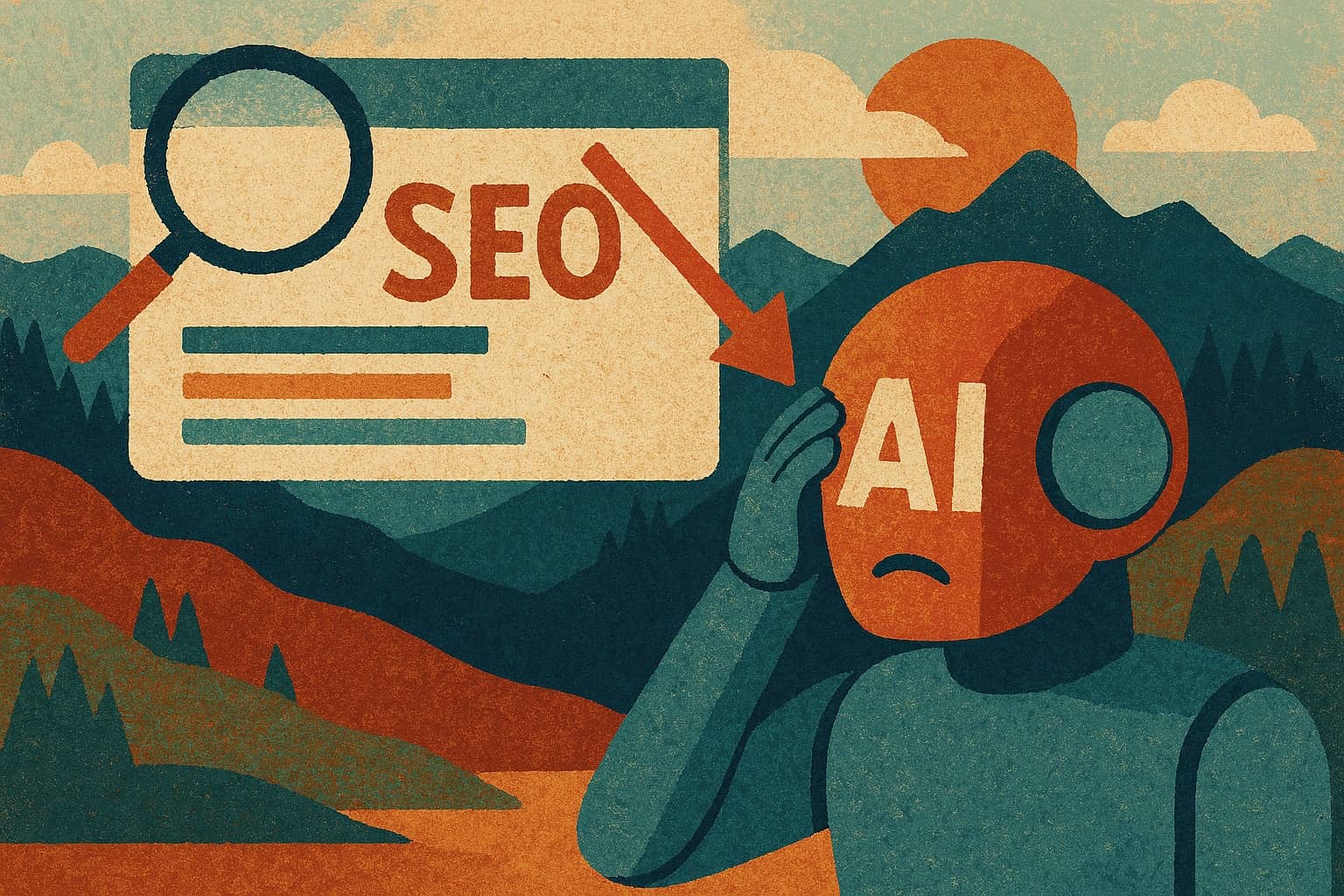
That’s why we say AI sucks at SEO, it’s a tool, not a compass.
Key Takeaways
- AI is a lift, not a strategy: speeds production but can’t replace human decision‑making.
- Local nuance and EEAT matter: real-world experience and trust win local search.
- Use AI tactically: let AI handle drafts; keep humans in charge of strategy.
1. AI Writes Fast. But AI Sucks at SEO Without Understanding
AI is trained to predict language. It’s excellent at pattern completion and at producing text that looks like what people write. But SEO is not primarily a language problem, it’s a human problem. When someone in Denver searches “best injury lawyer near me,” they’re not looking for a polished legal primer. They want reassurance, local context, and signals that the firm understands Colorado courts, local judges, and how insurance companies behave in the state.
AI can produce a clean, generic article that reads well but says very little. Google’s algorithms (especially those tuned to reward helpful, experience-driven content) are increasingly good at detecting when content is merely polished surface-level text.
High‑level comparison: AI vs Human SEO
| Attribute | AI Strength | Human Strength |
|---|---|---|
| Speed | Drafts content quickly | Curates and refines with strategy |
| Scale | Produces many pages | Prioritizes high‑impact pages |
| Pattern recognition | Identifies language patterns | Interprets user intent and local signals |
| Local knowledge | Generic, pattern‑based | Deep, place‑specific nuance |
| Risk assessment | Generates options | Chooses based on consequences |
2. AI Has No Sense of Place & Local SEO Is All About Place
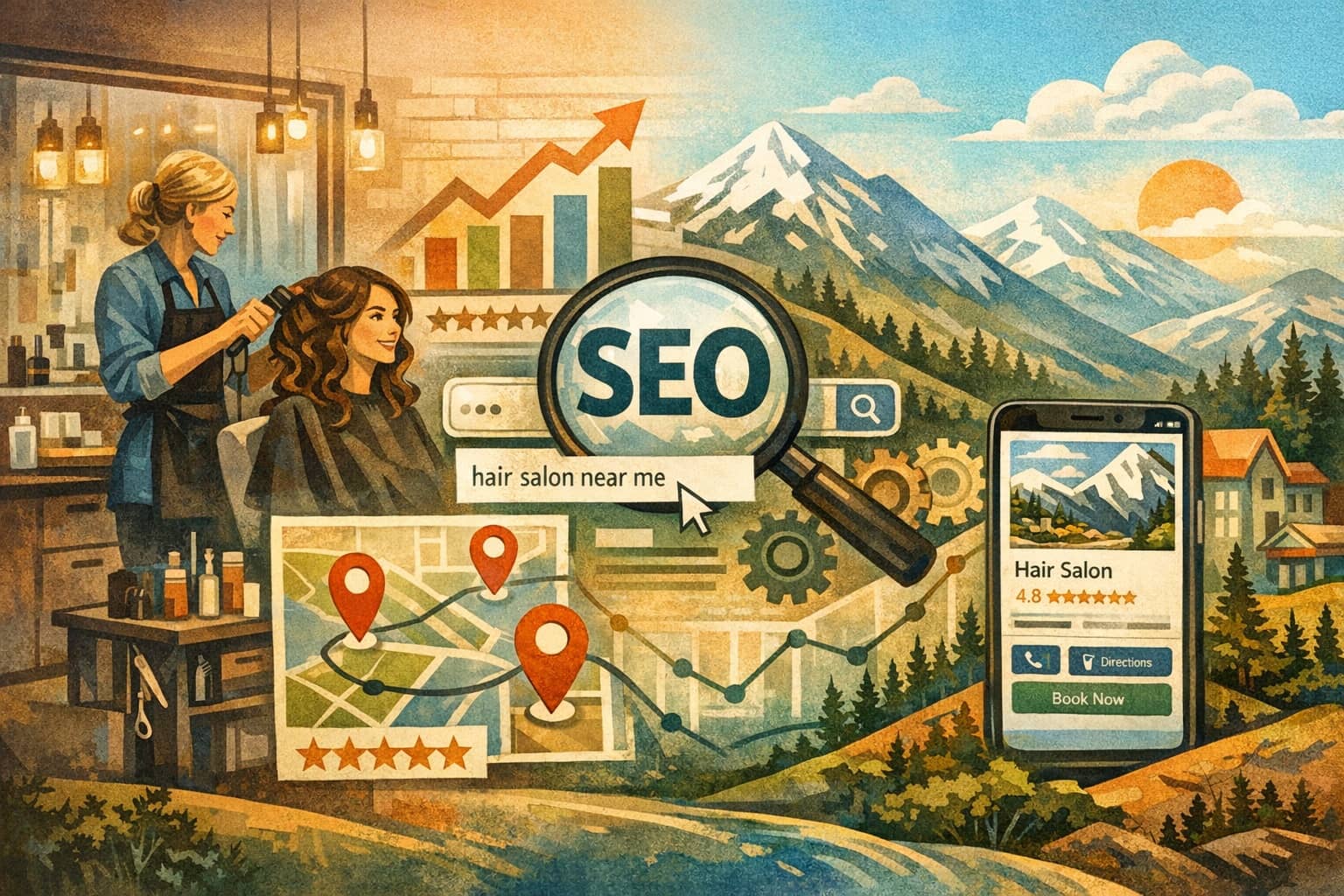
This is where AI sucks at SEO, it can’t grasp local nuance. Colorado is not Texas. Castle Rock is not Colorado Springs. Fort Collins is not Aurora. Local SEO is built on nuance: local regulations, local competitors, local search behavior, local terminology, and local expectations. AI models don’t live in these places. They don’t attend county meetings, they don’t know which neighborhoods prefer which terminology, and they don’t understand how local seasonality affects search intent.
3. AI Can’t See What’s Missing
- Missing service pages for specific towns or neighborhoods
- Missing internal links that would pass authority to priority pages
- Missing topical depth that prevents a site from ranking for competitive queries
- Missing authority signals like local citations, case studies, and testimonials
- Missing conversion paths that turn traffic into leads
Practical SEO checklist for Colorado businesses
| Priority | Action | Why it matters |
|---|---|---|
| High | Create local service pages for each town served | Captures local intent and improves relevance |
| High | Add structured data (localBusiness, reviews) | Helps search engines display trust signals |
| Medium | Audit internal linking and topical depth | Prevents orphan pages and improves crawl equity |
| Medium | Build real local citations and partnerships | Strengthens authority in local searches |
| Low | Generate AI drafts for routine blog posts | Saves time; requires human editing for EEAT |
How to split work between AI and humans
| Draft outlines and first drafts | Set strategy and editorial stance |
| Summarize research and long documents | Validate facts and add local examples |
| Generate meta descriptions and variants | Choose which pages to prioritize for conversion |
| Suggest keyword clusters | Interpret intent and competitive context |
| Produce schema snippets | Implement, test, and monitor impact |
4. AI Doesn’t Understand Risk & And SEO Is Full of It
SEO is a series of consequential decisions: which pages to build, which keywords actually convert, which competitors are worth chasing, which technical issues are urgent. AI can generate options; it cannot weigh the trade‑offs. Choosing the wrong keyword or the wrong page structure can waste months of effort. Humans understand budgets, timelines, and the business consequences of SEO choices.
Where AI Fits & How Colorado Businesses Should Use It
- To speed up research and ideation
- To draft early versions of content that humans then refine
- To summarize long documents and extract key points
- To support technical tasks like schema generation and meta variants

Final Thoughts
AI is powerful at speed and scale, but let’s be clear: AI sucks at SEO when it comes to judgment, trust, and strategic depth.. AI can draft, summarize, and suggest, yet it cannot replace the lived experience that signals credibility to both users and search engines. When SEO succeeds, it’s because humans set the strategy, interpret intent, and make trade‑off decisions that align content with business outcomes.
Why AI falls short:
- No lived experience: AI can mimic local language but cannot demonstrate real-world expertise or local authority.
- Limited strategic judgment: AI proposes options; humans choose which opportunities matter and which risks to avoid.
- Blind to gaps: AI won’t spot missing pages, conversion paths, or the internal linking that turns traffic into leads.
What to do instead:
- Use AI as a tool, not a strategy: automate drafts and research, then have humans refine for EEAT and local relevance.
- Start with a human audit to identify gaps AI can’t see.
- Prioritize pages and keywords that drive revenue, not just traffic.
In short: AI is the lift; SEO is the trail map. Combine both and let AI accelerate the climb, but keep a human guide in front to choose the right trail, build trust, and reach the summit.
Content Strategy Definitions - Important Terms to Know
Prompt Engineering
Designing inputs that steer an AI model to produce accurate, on‑brand, and SEO‑relevant outputs.
AI Hallucination
When a model fabricates facts or details that are plausible but untrue or unverifiable.
Content Gap Detection
Automated identification of missing topics or pages competitors cover or users expect.
AI Model Bias
Systematic skew in model outputs caused by imbalanced or unrepresentative training data that affects relevance or fairness.